
Université Laval, Québec, le 30 avril 2008
Musée du Quai Branly, Paris, le 9 mai 2008
1.Sudel Fuma, professeur d’histoire, Université de la Réunion
Ces mémoires là…
The documentary is a part of the research project on memories of slavery in the Indian Ocean. A Reunion island inhabitant, descendent of a slave family from Madagascar, remembers island past and fate of slave descendants.
(2005, French, 26 minutes)
2.Hebe Mattos and Martha Abreu, Universidade Federal Fluminense, Laboratorio de Historia Oral e Imagem
Jongos, Calangos and Folias. Black music, memory and poetry
Jongos, Calangos and Folias is a documentary produced by the Universidade Federal Fluminense [Niteroi, Rio de Janeiro state, Brazil], through the Laboratory of Oral History and Image (LABHOI/UFF) and the Research Nucleus for Cultural History (NUPEHC/UFF), and sponsored by the programme Petrobrás Cultural (2005). Through jongos, calangos and King’s, the film allows a dialogue between the memory and the history of the last generation of Africans that arrived in Rio de Janeiro in the first half of the 19th century. It pays particular attention to the poetry in these celebrations, which are still carried out today, in the state of Rio de Janeiro, by many of the descendents of these last slaves.
The documentary was made with audiovisual sources from the research Project Memory of Slavery and Immaterial Patrimony in Rural Communities of Southeast Brazil. The research resulted in 180 hours of audiovisual sources – genealogical interviews, life narratives, and performances – which are open to the public at the UFF Library Audio Visual Collection (www.historia.uff.br/jongos). The collected material is the result of an intense collaboration between descendants of the last generation of African slaves living in rural communities in the interior of the state of Rio de Janeiro and the research team from the Universidade Federal Fluminense. The movie discusses the history of old poetic practices that are present until today in cultural manifestations like Jongos (a performance of song, drums and dance, now formally recognized by the government as part of Brazil’s cultural patrimony), Calangos (accordion and percussion balls with challenge songs) and group performances during Kings’ day. The film narrative also provides information about the social background of the performers, their struggles for land and their building of a new, contemporary identity as “maroon communities” – to whom an article of the Brazilian 1988 Constitution recognizes collective rights to land.
General direction: Hebe Mattos and Martha Abreu; Camara: Guilherme Fernández; Editor: Isabel Castro; Sound: Helio Leite; Coordination of production: Marta Nóbrega; Coordination of Research: Carolina Vianna, Carlos Eduardo Costa, Thiago Campos Pessoa. Produced by LABHOI – NUPEHC- UFF – PETROBRAS http://www.historia.uff.br/jongos/
(2007, English or Portuguese subtitles, 45 minutes)
3. Hebe Mattos, Universidade Federal Fluminense, Laboratorio de Historia Oral e Imagem
Memórias do Cativeiro
Memories of Captivity is a documentary produced by the research project Memories of Slavery (Universidade Federal Fluminense – UFF, 1994-2005). Ten years of research resulted in a book (Memories of Captivity. Family, Labor and Citizenship after Abolition) and an oral archive which holds genealogical interviews and life narratives recorded on cassette tapes (LABHOI-UFF, Oral History and Image Laboratory, http://www.historia.uff.br/labhoi). For the movie we edited the sound of the taped interviews, included 19th-century images, and further audiovisual material produced in 2005 with the rural black community of São José da Serra. Memories of Captivity discusses the memory of slavery and abolition among the families that descended from the last African slaves sold to coffee plantations in the interior of the state of Rio de Janeiro, and their struggle for survival after emancipation.
Based on the book “Memórias do Cativeiro. Família, Trabalho e Cidadania no Pós-Abolição” de Ana Lugão Rios e Hebe Mattos, Rio de Janeiro: Civilização Brasileira, 2005.
(2005, Portuguese with English subtitles, 45 minutes)
4. Behnaz Mirzai, Department of History, Brock University, St. Catharines, Canada
Afro-Iranian Lives
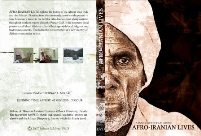 Afro-Iranian Lives is a documentary produced and directed by Dr. Behnaz Mirzai. Born and raised in Iran, Mirzai moved to Canada in 1997, where she studied slavery and the African Diaspora. The documentary is the result of her ten years extensive research in European and Iranian archives, and fieldwork and interviews in Iran. The movie explores the history of the African slave trade as well as African cultural tradition in Iran, and pays particular attention to socio-economic activities, performances and rituals of the descendants of African slaves in rural and urban communities in four provinces of Sistan va Baluchistan, Hurmuzgan, Bushihr, and Khuzestan. Mirzai’s aim was to visualize the lives of Afro-Iranians, who were widely scattered throughout southern regions along the Persian Gulf, and at the same time could preserve and blend African cultural heritage with local religious and traditional elements. By producing this documentary, she intended to demonstrate both the diversity of Iranian society as well as the reconstruction of a new identity of African communities in Iran.
(2008, English, 46 minutes)
5. Francine Saillant, professeur d’Anthropologie, Université Laval, Québec
Buscapé, un espace pour tous (Buscapé, a space for everyone)
Ce documentaire présente une forme d’intervention spécifique à une ONG de Salvador (Brésil) liant deux groupes sociaux: enfants en situation de risque social et personnes handicapées. Ces deux groupes ont en commun le fait d’appartenir au groupe le plus pauvre de la société et d’être Afro-Brésilien. L’intervention consiste en la préparation, pendant plusieurs mois, d’un groupe carnavalesque alternatif au carnaval officiel de Salvador et basé sur des éléments clefs de la culture afro-brésilienne. L’une des dimensions du défilé est de reprendre la figure de l’esclave qui tire à main d’homme la voiture occupée par d’autres hommes, les propriétaires, et d’inverser la proposition. Dans ce cas, ce sont des hommes libres qui tirent à main d’hommes d’autres hommes dont l’histoire fut celle de l’enfermement. L’ancien geste de l’esclave devient ici geste émancipatoire. Le documentaire présente les préparatifs et la sortie du groupe carnavalesque Buscapé.
(2007, portugais, sous titres anglais, 30 minutes)
6. Francine Saillant, professeur d’Anthropologie, Université Laval
O navio negreiro (Le navire négrier/ A Slave boat within the terreiro)
Ce documentaire présente une pièce de théâtre préparée dans un terreiro de Rio de Janeiro et montrant l’arrivée des esclaves au Brésil. Les acteurs sont des enfants, ainsi que des fils et filles de saints de même que la mère de saints de ce terreiro. Un récit est fait par la mère de saint qui explique aux enfants la sélection et la traversée des esclaves vers le Brésil, la manière dont les entités du candomblé et la culture africaine ont pu se retrouver au Brésil, l’arrivée des esclaves et leur apport culturel au pays. Le récit renverse la vision de l’esclave victime qui finit par être présenté comme un survivant et un héro culturel. La pièce est un moyen éducatif destiné aux jeunes Afro-brésiliens mis au service de la revalorisation et de l’affirmation identitaire.
(2008, portugais, avec portions du récit de la mère de saint en anglais, commentaires en français et en anglais, 30 minutes)
7. Pedro Simonard, chercheur postdoctoral, Université Laval, Québec, et Universidade Federal, Rio de Janeiro
Salve Jongo! (Salut jongo !)
Le jongo est une danse afro-brésilienne développée par les anciens esclaves dans les grandes exploitations agricoles où se cultivait le café au Brésil au XIXe siècle. Pendant le XXe siècle, l’urbanisation et la migration vers les grandes villes brésiliennes ont fait pratiquement disparaître le jongo. À Rio de Janeiro, le jongo est « survécu » dans le « morro da Serrinha », un bidonville. À la fin des années 1960, le jongo était en train de disparaître quand Mestre Darcy, un habitant de cette communauté, a proposé des modifications au jongo afin de le faire plus facilement accepter par la classe moyenne du Rio de Janeiro et de le montrer dans les théâtres, hors du territoire quilombo ou de la favela. Ce documentaire montre les modifications qui ont transformé le jongo en spectacle.
(2005, portugais, 25 minutes)
8. Pedro Simonard, chercheur postdoctoral à l’Université Laval et Universidade Federal, Rio de Janeiro avec Flávio dos Santos Gomes, Universidade Federal do Rio de Janeiro
O que remanesceu (Ce qui a survécu)
Dans la région nord du Brésil, sur les rives des plusieurs fleuves, existent certains endroits où co-habitent des communautés quilombolas, descendants des esclaves. Bien que localisés au milieu de la forêt, les habitants de ces villages ont construit plusieurs rapports commerciaux et culturels avec d’autres petits villages et avec les grandes villes de la région. Ce documentaire présente les relations sociales et la culture de ces populations pauvres. Pour présenter ces habitants descendants d’esclaves, il ne suffit pas de chercher des éléments culturels originaux ou de s’arrêter à la couleur de leur peau, mais plutôt de comprendre leurs histoires, leurs mémoires et leurs identités et, surtout, comment ils se présentent vis-à-vis les visiteurs dans les communautés qu’ils forment aujourd’hui.
(1997, 25 minutes)
9. Benigna Zimba, Scientific Director – Instituto Superior de Relações Internacionais, Associate Professor – Universidade Eduardo Mondlane, Maputo. Mozambique
Slave Routes and Oral Tradition in Southeastern Africa: History in Images
Slave Routes and Oral Tradition in Southeastern Africa: History in Images is a collection of about 300 digital photographs and short films. They are intended to depict a variety of visual representations that books, articles, or other forms of written documents on this subject, cannot describe. Most images of this collection were taken in 2003, during the latest phase of field research, which resulted in the publication of the book titled Slave Routes and Oral Tradition in Southeastern Africa, 2005. The countries involved are Mozambique, Malawi, Tanzania, and Kenya, and the images represent, among others, various forms of oral memory, archeological evidence, and traditional rituals that developed because of the growth of slave trade and slavery, mainly during the late 19th and the early 20th centuries. The video is organized in chapters by countries, and the final part tries to emphasize similarities among these countries.
(2008, Portuguese, 34 minutes)