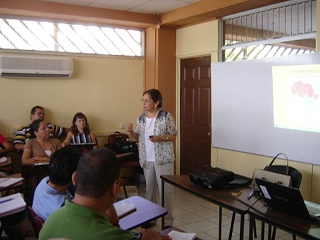
Teaching Workshop in Costa Rica
Hosted By
The Harriet Tubman Institute
Sponsors
The UNESCO “Slave Route” Project
Canadian Commission for UNESCO
Programa del Olvido a la Memoria, UNESCO-Universidad de Costa Rica
Hundreds of millions of people of African descent who live in different societies across the world trace their history back to Africa. Nonetheless, there is still a profound silence in the curricula and the manuals of primary and secondary schools about the crucial historical events that shaped modern societies, especially the slavery of millions of Africans. However, new educational techniques and greater accessibility to teaching materials, in large part prompted by UNESCO initiatives, have helped to break the “chain of silence” and to prompt curricular reform that allows students access to knowledge about this past. The common goal of the initiatives that have been undertaken in different regions of the world is to contribute to a better understanding of the slavery of millions of people and the social consequences of racism. The implications affect the interactions among peoples in the present global world. Breaking the silence requires more than confronting the history of slavery; it requires teaching African history.
The purpose of the Workshop is to provide a forum where experts can share experiences in developing pedagogic materials and innovative strategies to teach about the slave trade and slavery and the heritage of Africa in the diaspora of the Americas.
Besides reviewing the ways the African legacy have been presented, or not, the objective is to analyze all materials that are used in schools that relate to teaching national, regional, and global history and explore how the teaching program of history, literature, and the social studies at the primary and secondary levels can be improved. In particular, the Workshop aims to assess the methodologies used so far in different regions of the world and, based on the lessons learnt, discuss new approaches to be developed in order to enhance the pedagogy of teaching the history of Africans and their descendents and the resilience of African culture in the global diaspora, despite the legacy of slavery.
The Workshop provides an opportunity to share the work at UNESCO to promote a better study of history that began with the publication of General and Regional Histories. The pedagogic use of the General History of Africa will be analysed in such regard. The participants will be invited to define guidelines facilitating the preparation of a general framework for lobbying action to convince Ministries of Education to foster and integrate the teaching of the African History and the transatlantic slave trade and slavery into school curricula. The emphasis will be on the contributions of Africans and their descendants in the development and enrichment of the contemporary world.
Besides cultural interactions generated by the slave trade and slavery among peoples of different continents, this encounter, marked by extreme violence and barbarism has caused multifaceted injuries that are passed down from generation to generation among the descendents of the different actors/victims of this tragedy (both the descendants of slaves and the descendants of former enslavers as well). This imprint is still rooted in traumatic experiences faced today and could explain certain behaviour and social relations in post slavery societies.
The need to further explore the psychological and psycho-social development of the slave trade and slavery is therefore essential. The complexity of behaviour and relationships that punctuate life in multicultural societies mark this history. It is also recognized that many people of African descent in the Americas and in Africa want to emphasize the great achievements of developing the Americas and enriching the musical, artistic and literary cultures of the world.
The Workshop addresses teachers and pedagogues who are involved in implementing curriculum on the slave trade, slavery, the legacy of Africa in the Americas, and the achievements of the African Diaspora. Historians, decision-makers in curriculum planning, users of pedagogic materials, and professionals and decisions makers in charge of public services will discuss the psychological consequences of the slave trade, slavery and racism as a factor in learning.
This Workshop is organized within the UNESCO framework designating 2010 International Year for the Rapprochement of Cultures and also paves the way for 2011, which has been designated International Year for People of African Descent.[1]
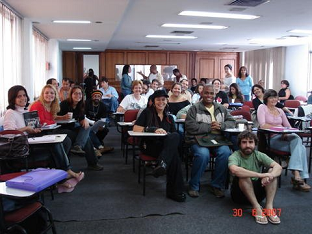
Teachers Workshop in Brazil
[1] United Nations Resolution A/RES/64/169, adopted in November 2009.
Invited Participants
Jaime Arocha, Universidad Nacional de Colombia
Hilary Beckles, Principal, University of the West Indies, Barbados
Benjamin Paul Bowser, California State University, USA
Yvonne Brown, Harriet Tubman Institute
Katrina Browne, Tracing Center on Histories and Legacies of Slavery, USA
Jhon Picard Byron, Universite d’ Etat, Haiti
Rina Cáceres, Universidad de Costa Rica
Quince Duncan, International Scientific Committee, UNESCO “Slave Route” Project, Costa Rica
Darío A. Euraque, Trinity College, USA (Honduras)
Nicolas Evans, WISE, University of Hull, UK
Abubakar Fofana, York University (Cuba)
Kevin Franklin, I-CHASS, University of Illinois
Michael Gomez, New York University and UNESCO “Slave Route” Project
Larry Higginbottom, Osiris Group, USA
Thando Hyman-Aman, Toronto Schools, Canada
Ali Moussa Iye, Intercultural Dialogue Section, UNESCO
Michele Johnson, The Harriet Tubman Institute, York University
Arlene Keizer, University of California, Irvine, USA
Monica Lima Souza, Universidade Federal do Rio de Janeiro, Brazil
Paul Lovejoy, The Harriet Tubman Institute, York University
Shannon Prince, Buxton National Historic Site and Museum, Buxton Canada
Monica Regisford-Douglin, Trinidad and Tobago National Commission for UNESCO
Dominique Rogers, EURESCL, Martinique
Viviane Rolle-Romana, Université Paris 8 Saint-Denis, France
Suzanne Schwarz, Liverpool Hope University, UK
Ibrahima Seck, Université Cheikh Anta Diop Senegal
Verene Shepherd, University of the West Indies, Jamaica
Karolyn Smardz Frost, The Harriet Tubman Institute, York University
Juliette Sméralda, Université des Antilles de la Guyane
Marie-Albane de Suremain, EURESCL, France
Lennox K. Thomas, Institute of Family Therapy, USA
Thomas Thurston, Gilder Lehrman Center, Yale University, USA
David V. Trotman, Harriet Tubman Institute, York University
Maria Elisa Velazquez, International Scientific Committee, UNESCO “Slave Route” Project, Mexico
Sheila Walker, Afrodiaspora, Inc., USA
Workshop Organizers
Paul Lovejoy, The Harriet Tubman Institute, York University
Rina Cáceres, Universidad de Costa Rica
Ali Moussa Iye, Intercultural Dialogue Section, UNESCO
Sponsors
The UNESCO “Slave Route” Project
Canadian Commission for UNESCO
Programa del Olvido a la Memoria, UNESCO-Universidad de Costa Rica
The Harriet Tubman Institute for Research on the Global Migrations of African Peoples
To access the workshop website, click here
Place:
The Harriet Tubman Institute, York University.
Date:
Fri, 11/05/2010 – Sun, 11/07/2010