
Organizers: José C. Curto and David V. Trotman
Contact: [email protected]
Final Program
Download Registration Form
SPONSORS:
Harriet Tubman Institute, York U
Master’s Office, Founders College, York U
Vice President, Academic, York U
Department of History (Arts), York U
Graduate Studies, Department of History, York U
Division of Humanities, York U
International Development Studies, YorkU
Founders College Student Council, York U.
Dean’s Office, Faculty of Arts, York U
Dean’s Office, Faculty of Graduate Studies, York U
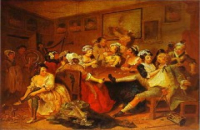 Since humans discovered the effects that could be derived from alcohol there has been interest in its economic and social benefits as well as its negative effects on individuals and society. Yet the systematic study of alcohol in its varied historical and sociological manifestations is still in its infancy since it is usually relegated only to discussions of morality and sensational journalism.
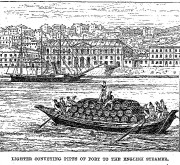 Alcohol in the Atlantic World: Historical and Contemporary Perspectives is an international workshop aimed at exploring the ways in which alcohol provided a mechanism for integrating the Atlantic world, viz, Europe, Africa and the Americas. The focus is on the commonalities and differences in the production, distribution and consumption within this described geographical entity. The participants in the Workshop will present papers which cover: the techniques of production (the fermentation and distillation possibilities of byproducts from mainstream commodities, changes in systems of production and their associated technologies, the varied uses of labour); systems of distribution within colonies and between colonies and metropoles as alcohol, as a commodity of trade, moved around the Atlantic world and between producers and consumers; and the varied uses of alcohol and its impact in the consuming areas of the Atlantic world.
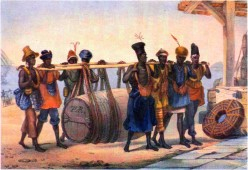 The workshop will be held in a year in which there is international focus on the Abolition of the Atlantic Slave trade by the British, the subsequent international campaign for the suppression of all trades in slaves, and the eventual emancipation of enslaved persons in the Atlantic World controlled by European colonizers. In concert with this international focus on the horrors of the traffic in human captives, this workshop highlights their utilization in the production of commodities for an international market. This workshop explores the production, distribution and consumption of alcoholic beverages as an integral part of the world created by the slave trade and slavery. Moreover the workshop also examines the role played by alcohol in the campaign to suppress the slave trade and promote “legitimate” commerce. Some of the papers in the workshop also examine the attempts to prohibit the production and distribution and limit the consumption of alcohol. These attempts at prohibition which made a trade and commodity illegal in some parts of the Atlantic world has parallels for current discussions of the attempts to deal with the modern illegal trade in drugs.
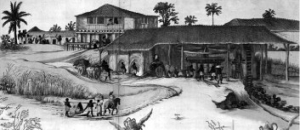 Although the emphasis is on the formative period of the Atlantic world, that is, the period usually associated with the use of enslaved and other forms of coerced labour, Alcohol in the Atlantic World: Historical and Contemporary Perspectives will also feature papers which center on the more contemporary emergence of a globalized system of production and distribution. In this way it offers an opportunity to discuss and compare an earlier system of a global economy with the current discussions of the contemporary global economy.
 This workshop is a multidisciplinary approach to the study of Alcohol in the Atlantic World. Although heavily grounded in the historical sciences it has carefully selected participants who utilize methodologies and perspectives drawn from a wide variety of disciplines including anthropology, criminology, economics, sociology and political science. The participants for this workshop are a carefully selected combination of senior scholars, junior academics and promising graduate students. We believe that this combination will allow the workshop to satisfy its underlying aims of taking stock of the scholarship in this area and mapping out future directions for research. Among our senior scholar participants are those whose published work in this area has not only been pioneering but has also been pathbreaking in the way in which they have outlined the general parameters of the discussion of the topic. The junior scholars we have chosen have fruitfully developed on those pioneering works and the chosen graduate students seem poised to expand the scholarship by asking new questions and exploring new lines of inquiry. Both international and Canadian research and scholarship will benefit from the scholarly interactions of the workshop. Canadian scholarship, with the significant exception of Harold Inniss, has traditionally not been concerned with Canada’s role in the Atlantic world. The study of Alcohol offers another opportunity to examine Canada’s participation in the creation of that first world or globalized economy as well as its current interactions with the contemporary processes of globalization. In the process we envisage an enrichment of Canadian and international scholarship.
The international workshop on Alcohol in the Atlantic World: Historical and Contemporary Perspectives is the first major event to be organized under the auspices of and hosted by the recently created Harriet Tubman Institute for Research on the Global Migrations of African Peoples, York University. Registration is required for those who plan to attend. Registration fees for faculty have been set at CAD $ 100.00 before September 15, 2007, and CAD $ 125.00 after September 15, 2007. There are no registration fees for graduate and undergraduate students. The papers to be presented at workshop will be made available for circulation amongst registered participants by mid-September, 2007, via the website of Tubman Institute